Para los Lectores

En este Blog pueden Consultar libros gratis, ya sea descargar con fines de lectura o consulta, orientados al estudio.
Hay libros de Preescolar y Primaria orientados a Experimentos en general, a Electricidad y Magnetismo.
Los libros de Primaria en adelante orientados a Electricidad, ElectroMagnetismo y Electrónica.
También se abarca Electricidad, Electricidad y Electrónica del Automotor o Automotriz y todas las ramas de la Electrónica.
Ademas hay colecciones de libros que pueden estar fuera de la temática de la Electrónica (como ser Biología, etc...) y otras afines necesariamente como ser Física, Matemática y Química.

Buscar en este Blog

Queres ser Seguidor del blog?

Mostrando entradas con la etiqueta Programacion. Mostrar todas las entradas

sábado, 23 de febrero de 2013

Programacion Pic 16F87XX En C++

https://blogger.googleusercontent.com/img/b/R29vZ2xl/AVvXsEj80ey7y_mOZ7ExOxl4ro1i3Xjf10s2FCEMn5YyeST1BdKSarELU8uNTnyiOMhgLL3Z8c3l2hfbRhqo18Ru681B00DP54Z70DJwxeEimM6_m2XYxmX7wR55k3t2HiVyfuLFlw6bn2TnuK8/s128/Programacion%20Pic%2016F87XX%20En%20C++.jpg Programación Pic 16F87XX En C++

Reseña
Formato de Presentación, de programación de PIC en C++.
INDICE
  • IDES
  • BOOTLOADER
  • Plataformas Desarrollo De Proyectos
  • Recordatorio De C
  • Programación En C De Los Módulos Del PIC16F8XX. Entrada/Salida Digital. Comunicaciones RS232. Interrupciones. Convertidor A/D. CCP (PWM).
Consulta el Libro (2 MB) por:
Para los que usan Gestores de Descarga
http://adf.ly/IyoAz
http://adf.ly/IyoB1
http://adf.ly/IyoB2
http://adf.ly/IyoB3

domingo, 17 de febrero de 2013

Manual Del Pic Basic Compiler Pro

https://blogger.googleusercontent.com/img/b/R29vZ2xl/AVvXsEhAxde_pwtyfVPC-WUDvuWSSsPcvo4N_BmVF1Ki7rec89mSv_8f00uRnAV4kmBKfFrTELj8NpIaYATJAoA_W4CcMcD3ph6iyRoPYafVV85bUyO2WDetJfF5twc6tL79kH31L6rUIJk368o/s128/Manual%20Original%20Del%20Pic%20Basic%20Compiler%20Pro%20Luis%20Frino.jpg Manual Original Del Pic Basic Compiler Pro 
Luis Frino

Reseña
El compilador PicBasic Pro (PBP) es nuestro lenguaje de programación de nueva generación que hace mas fácil y rápido para usted programar micro controladores Pic micro de Microchip Technology . El lenguaje Basic es mucho más fácil de leer y escribir que el lenguaje ensamblador Microchip.
El PBP es similar al “BASIC STAMP II” y tiene muchas de las librerías y funciones de los BASIC STAMP I y II. Como es un compilador real los programas se ejecutan mucho más rápido y pueden ser mayores que sus equivalentes STAMP. PBP no es tan compatible con los BASIC STAMP como nuestro compilador PicBasic es con el BS I.
Decidimos mejorar el lenguaje en general. Una de estas decisiones fue agregar IF ...THEN...ELSE...ENDIF en lugar de IF.. THEN (GOTO) de los Stamps. Estas diferencias se ven luego en este manual. PBP por defecto crea archivos que corren en un PIC 16F84-04/P con un reloj de 4 Mhz. Solamente muy pocas partes son necesarias capacitores de dos capacitores de 22 pf para el cristal de 4Mhz un resistor de 4.7K en el pin/MCLR y una fuente de 5 volt. Otros micros PIC además del 16F84, así como otros osciladores de frecuencias distintas pueden ser usados por este compilador.

INDICE
  • Introducción. Los micro. Acerca de este manual.
  • Empezando desde el principio. Instalación del software. Su primer programa. Programando el micro. Está vivo. Tengo problemas. Estilo de código. Comentarios. Nombres de pin y de variable. Etiquetas. Goto.
  • Opciones de línea de comando. Uso. Opciones. Opción -A. Opción -C. Opción -H o -?. Opción -I. Opción -L. Opción -O. Opción -P. Opción -S. Opción -V.
  • Bases del PBP. Identificadores. Etiquetas de línea (labels). Variables. Alias. Arrays (arreglos). Constantes. Símbolos. Constantes numéricas. Sarta de constantes. Pins. Comentarios. Declaraciones múltiples. Carácter de extensión de línea. Include. Define. Operadores matemáticos. Multiplicación. División. Desplazamiento. ABS. COS. DCD. DIG. MAX y MIN. NCD. REV. SIN. SQR. Operadores de bit inteligente. Operadores de comparación. Operadores lógicos.
  • Referencia de declaraciones PBP. @. ASM.ENDASM. BRANCH. BRANCHL. BUTTON. CALL. CLEAR. COUNT. DATA. DEBUG. DISABLE. DTMFOUT. EEPROM. ENABLE. END. FOR…NEXT. FREQOUT. GOSUB. GOTO. HIGH. HSERIN. HSEROUT. I2CREAD. I2CWRITE. IF…THEN. INPUT. {LET}. LCDOUT. LOOKDOWN. LOOKDOWN2. LOOKUP. LOOKUP2. LOW. NAP. ON INTERRUPT. OUTPUT. PAUSE. PAUSEUS. PEEK. POKE. POT. PULSIN. PULSOUT. PWM. RANDOM. RCTIME. READ. RESUME. RETURN. REVERSE. SERIN. SERIN2. SEROUT. SEROUT2. SHIFTIN. SHIFTOUT. SLEEP. SOUND. STOP. SWAP. TOGGLE. WHILE…WEND. WRITE. XIN. XOUT.
  • Estructura de un programa compilado. Apuntar a encabezados de destino específicos. Archgivos de librería. Código generado PBP. Estructura del archivo .ASM.
  • Otras consideraciones PBP. ¿Cuan rápido es suficientemente rápido?. Valores predeterminados (seteos) de configuración. Uso de RAM. Palabras reservadas. Vida después de 2K.
  • Programación en lenguaje ensamblador. Dos ensambladores. Sin demora. Programando en lenguaje ensamblador. Ubicación del ensamblador en línea. Otro tópico acerca del ensamblador.
  • Interrupciones. Interrupciones en general. Interrupciones en BASIC. Interrupciones en ensamblador.
  • Diferencias entre PBP / Picbasic / Stamp. Velocidad de ejecución. I/O Digital. Instrucciones de baja potencia. PC, la interfase perdida. Sin variables automáticas. Operadores matemáticos. [] versus (). DATA, EEPROM, READ y WRITE. Depuración. I2CREAD y I2CWRITE. IF.THEN. MAX y MIN. SERIN y SEROUT. SLEEP. Apéndice A. Sumario de instrucciones ensamblador.

Consulta el Libro (500 KB) por:
Para los que usan Gestores de Descarga
http://adf.ly/Ix5eN
http://adf.ly/Ix5eO
http://adf.ly/Ix5eP
http://adf.ly/Ix5eQ

martes, 31 de julio de 2012

Programming Video Games for the Evil Genius

https://blogger.googleusercontent.com/img/b/R29vZ2xl/AVvXsEjDBM3BK8CibH7pbsot-mtgXQ9tnt2Z7T9F5-jr3iYgTL0ymU218qmaUudjNZk8mTdqsAfz10qQ4xsZrB7UMYRGY7g7nt9X2J04Zb-dCiUaHgwSJ158F45XhXAXwgpn5pJzt80nI0e8Aq0/s128/Programming%20Video%20Games%20for%20the%20Evil%20Genius.jpg
Programming Video Games for the Evil Genius
Ian Cinnamon
Reseña
Always wanted to be a genius game creator? This Evil Genius guide goes far beyond a typical programming class or text to reveal insider tips for breaking the rules and constructing wickedly fun games that you can tweak and customize to suit your needs!
In Programming Video Games for the Evil Genius, programming wunderkind Ian Cinnamon gives you everything you need to create and control 57 gaming projects. You’ll find easy-to-follow plans featuring Java, the most universal programming language, that run on any PC, Mac, or Linux computer.
Siempre quisiste ser un genio creador de juegos ? Esta guía de genio malvado va mucho más allá de la típica clase de programación o texto para revelar consejos de expertos para romper las reglas y la construcción de juegos perversamente divertidos que usted puede modificar y personalizar a sus necesidades!
En Video Juegos programación para el genio malvado, niño prodigio de la programación Ian Cinnamon le ofrece todo lo necesario para crear y controlar los juegos  de 57 proyectos. Usted encontrará fácil de seguir, que ofrecen planos Java, el lenguaje de programación más universales, que se ejecutan en cualquier PC, Mac, o Linux.
INDICE
  • Java Jumpstart
  • This tutorial section systematically provides all basic skills necessary to program the games in this book ... and beyond.. The Repeater. Guess the Password. Number Cruncher. Number Cruncher Extreme. Crack the Code. Virtual Game Library. Virtual Game Library Pro Edition. Number Guesser
  • Racing Games
  • Radical Racing. The Track. The Cars. Collision!. Customizing
  • Screen Skier. The Slope. Practice Run. Expert Slope. Bulldozer. Competition
  • Board Games
  • Whack-an Evil Genius. The Lab. Quick! Get ’em!. Getting Smarter .... Showdown
  • Tic-Tac-Toe Boxing. The Ring. Fight!!!. Knock Out. Championship
  • Shoot-’Em-Up Games
  • Snake Pit. The Arena. Snake Bait. Snake Bite!. King Cobra
  • Space Destroyers. The Landscape. Lasers. Retaliation. Life and Death
  • Strategy Games
  • Bomb Diffuser. Bomb Squad Noob. Expert Diffuser. Kaboom!!!. Rising Through the Ranks
  • Trapper. Men on the Move. Setting the Trap. Trapped!. Showdown
  • Retro Games
  • Oiram. The Platform. Go, Oiram, Go. Bad Guys. Complicated World
  • Java Man. Java Man’s Universe. Java Man Lives!. C++ Attacks. Obituaries
  • Brain Busters
  • Memory. Grid Design. Match Time. Beat the Clock. Photo Finish
  • Ian Says. Color Quad. Brain Drain. More Rounds, More Frustration. Play. Accessories
  •                         
Consulta el Libro (5 MB) por TurboBit y MediaFire:
https://blogger.googleusercontent.com/img/b/R29vZ2xl/AVvXsEj3pVy7VKqDKhwCzIr46Pv2itVJJbESHi1yF58KctQtW7EpKVPSdu2YcsH-Bv7rP1zeRUdftqDXMdM3LwZR1g8Ibt6A_Y8jD6uM2SZEEDOmSm8jwjT5OvhQ_TMJDucRF-gqfcGnrs7Q1TY/s200/logo+Tubobit.net.png
http://3.bp.blogspot.com/-OEWn1AqMuVE/TzU_WLZJTTI/AAAAAAAAAwU/CLW8I82-w8M/s200/Logo+MediaFire.jpg


lunes, 30 de julio de 2012

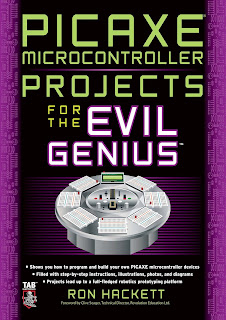
PICAXE Microcontroller Projects for the Evil Genius

https://blogger.googleusercontent.com/img/b/R29vZ2xl/AVvXsEgGWJryXbUrxZbZm6k6hnMe7RjGUY7KFnfQOB8xlFK67AgjChZid8C2PqmJpG7-2JzLZG71maZV_zaR7z2YXdGP4nYbitSo5FKkACMvIYA8POa6Dk2VYjeEAOY0aGwkDrqKjukA3XF3_xE/s128/PICAXE%20Microcontroller%20Projects%20for%20the%20Evil%20Genius.jpg
PICAXE Microcontroller Projects for the Evil Genius
Ron Hackett
Reseña
Whip up some fiendishly fun  PICAXE microcontroller devices.
"Ron has worked hard to explain how the PICAXE system operates through simple examples, and I'm sure his easy-to-read, style will help many people progress with their PICAXE projects."
This wickedly inventive guide shows you how to program, build, and debug a variety of PICAXE microcontroller projects. PICAXE Microcontroller Projects for the Evil Genius gets you started with programming and I/O interfacing right away, and then shows you how to develop a master processor circuit.
Estimular algunos endiabladamente divertidos dispositivos microcontroladores PICAXE.
"Ron ha trabajado duro para explicar cómo el sistema PICAXE opera a través de ejemplos sencillos, y estoy seguro de que su estilo fácil lectura, contribuirán al progreso de muchas personas con sus proyectos PICAXE".
Esta guía de perversa inventiva que muestra cómo programar, construir y depurar una serie de proyectos microcontroladores PICAXE. Proyectos PICAXE microcontroladores para el genio malvado es comenzar con la programación y la E / S de la interfaz de inmediato, a continuación, muestra cómo el desarrollo de un circuito procesador maestro.
INDICE
  • PICAXE Basics.
  • Introduction to PICAXE Programming and Projects
  • Introduction to Stripboard Circuits
  • Designing and Building a +5V Regulated Power Supply
  • Hardware Overview of the PICAXE M2-Class Processors
  • The Ins and Outs of PICAXE Interfacing
  • Introduction to ADC Inputs on M2-Class Processors
  • PICAXE Peripheral Projects.
  • Introduction to the PICAXE-20X2 Processor
  • Infrared Input from a TV Remote Control
  • Interfacing Parallel LCDs
  • Serializing a Parallel LCD
  • Interfacing Keypads
  • SPI Communication
  • Background Timing on the 20X2 Processor
  • Constructing a Programmable Multifunction Peripheral Device
  • Developing Software for the Evil Genius MPD
  • Octavius: An Advanced Robotics Experimentation Platform.
  • Birthing Octavius
  • Driving Octavius
  • Programming Octavius
  •                         
Consulta el Libro (9 MB) por TurboBit y MediaFire:
https://blogger.googleusercontent.com/img/b/R29vZ2xl/AVvXsEj3pVy7VKqDKhwCzIr46Pv2itVJJbESHi1yF58KctQtW7EpKVPSdu2YcsH-Bv7rP1zeRUdftqDXMdM3LwZR1g8Ibt6A_Y8jD6uM2SZEEDOmSm8jwjT5OvhQ_TMJDucRF-gqfcGnrs7Q1TY/s200/logo+Tubobit.net.png
http://3.bp.blogspot.com/-OEWn1AqMuVE/TzU_WLZJTTI/AAAAAAAAAwU/CLW8I82-w8M/s200/Logo+MediaFire.jpg

INDICE GENERAL
  • PICAXE Basics.
  • Introduction to PICAXE Programming and Projects. Choosing a PICAXE Processor. Interfacing a Project with Your Mac or PC. Using RevEd’s Free Programming Editor or AXEpad Software. Programming in PICAXE BASIC. Breadboards, Stripboards, and PC Boards. “Hello World”. Debugging a PICAXE Project.
  • Introduction to Stripboard Circuits. Designing Stripboard Circuits. Tools for Stripboard Circuit Construction. The USBS-PA3 PICAXE Programming Adapter. Hello Again.
  • Designing and Building a +5V Regulated Power Supply. Designing a +5V Regulated Power Supply for Breadboard Circuits. More Power, Scotty!.
  • Hardware Overview of the PICAXE M2-Class Processors. General-Purpose Variables. Storage Variables. Special-Function Variables. Cylon Eye.
  • The Ins and Outs of PICAXE Interfacing. PICAXE I/O Interfacing. Setting Up an Interrupt Routine. Mary.
  • Introduction to ADC Inputs on M2-Class Processors. Voltage Dividers. A Three-State Digital Logic Probe. 
  • PICAXE Peripheral Projects.
  • Introduction to the PICAXE-20X2 Processor. Advanced Features of the 20X2 Processor. Implementing the 20X2 Master Processor Circuit.
  • Infrared Input from a TV Remote Control. Reception and Transmission of Standard TV IR Signals. IR-Based Serial Communications. Simple IR Object-Detection. Experiment 1: A Simple TV-IR Input Circuit. Experiment 2: Interfacing the IR Circuit with the Master Processor. Constructing the TV-IR Input Module.
  • Interfacing Parallel LCDs. Understanding the Basics of HD44780-based LCDs. Experiment 1: Interfacing an HD44780-based Parallel LCD. Constructing an Eight-bit Parallel 16 x 2 LCD Board. Programming Challenge.
  • Serializing a Parallel LCD. Receiving Serial Data in the Background. Constructing a Serialized 16 x 2 LCD.
  • Interfacing Keypads. Decoding Matrix Keypads. Constructing a Serialized 4 by 4 Matrix Keypad.
  • SPI Communication. The MAX7219 8-Digit LED Display Driver. Constructing an SPI 4-Digit LED Display. Learning to Count.
  • Background Timing on the 20X2 Processor. Using Timer1 on the 20X2 Processor. “Deconstructing” a Matrix Keypad. Testing the “New and Improved” Keypad. Constructing a Countdown Timer.
  • Constructing a Programmable Multifunction Peripheral Device. The Evil Genius Multifunction Peripheral Device.
  • Developing Software for the Evil Genius MPD. Understanding the 20X2’s Built-in Comparator Hardware. Testing Our Comparator 1 Configuration. “We Interrupt This Program to Bring You a Keypress!”. A Simple MPD Operating System.
  • Octavius: An Advanced Robotics Experimentation Platform.
  • Birthing Octavius. Understanding Octavius. Building Octavius.
  • Driving Octavius. H-Bridge Motor Control Circuits. The L298 Dual H-Bridge Driver. Constructing an L298 Dual DC Motor Controller Board.
  • Programming Octavius. The MaxBotix LV-MaxSonar Ultrasonic Range Finders. Who’s in Charge Here?. Hail, Octavius!. Epilogue: What’s Next for Octavius?.
 

sábado, 14 de julio de 2012

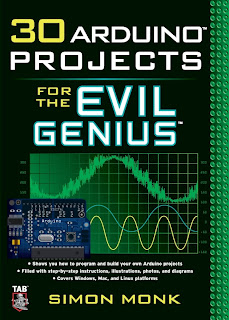
30 Arduino Projects for the Evil Genius Simon Monk

https://blogger.googleusercontent.com/img/b/R29vZ2xl/AVvXsEjuY7znPTntqnASD84B83V2wpFf_527IiIYYIrEoKDUGURCTLfgh6tzDflwP9GFGI-3rYhI2e5BzG4pzu0K2YfmXt5FyCX8YAjB8u990r9dWNnNjBThJuJZ9fWKB1SGMfbzxOyImr61Jjk/s128/30%20Arduino%20Projects%20For%20The%20Evil%20Genius.jpg
30 Arduino Projects for the Evil Genius
Simon Monk 
Reseña
30 Ways to Have Some Computer-Controlled Evil Fun!
This wickedly inventive guide shows you how to program and build a variety of projects with the Arduino microcontroller development system. Covering Windows, Mac, and Linux platforms, 30 Arduino Projects for the Evil Genius gets you up to speed with the simplified C programming you need to know--no prior programming experience necessary.
Using easy-to-find components and equipment, this do-it-yourself book explains how to attach an Arduino board to your computer, program it, and connect electronics to it to create fiendishly fun projects. The only limit is your imagination!
30 maneras de pasar un buen rato mal controlado por ordenador!
Esta guía de malvada la invención que muestra cómo programar y construir una gran variedad de proyectos con el sistema de desarrollo Arduino microcontrolador. Cubriendo Windows, Mac y Linux, de 30 Proyectos Arduino para el Genio Malvado que se levanta al día con el procedimiento simplificado de programación C que necesita saber - no es necesario experiencia previa en programación.
Uso fácil de encontrar componentes y equipos, este hágalo usted mismo el libro explica cómo conectar una placa Arduino a su equipo, que programa, y conectar la electrónica para crear proyectos endiabladamente divertidos. El único límite es tu imaginación!
INDICE
  • Quickstart
  • A Tour of Arduino
  • LED Projects
  • More LED Projects
  • Sensor Projects
  • Light Projects
  • Sound Projects
  • Power Projects
  • Miscellaneous Projects
  • Your Projects
  • Appendix      
Consulta el Libro (8 MB) por TurboBit y MediaFire:
https://blogger.googleusercontent.com/img/b/R29vZ2xl/AVvXsEj3pVy7VKqDKhwCzIr46Pv2itVJJbESHi1yF58KctQtW7EpKVPSdu2YcsH-Bv7rP1zeRUdftqDXMdM3LwZR1g8Ibt6A_Y8jD6uM2SZEEDOmSm8jwjT5OvhQ_TMJDucRF-gqfcGnrs7Q1TY/s200/logo+Tubobit.net.png
http://3.bp.blogspot.com/-OEWn1AqMuVE/TzU_WLZJTTI/AAAAAAAAAwU/CLW8I82-w8M/s200/Logo+MediaFire.jpg


INDICE GENERAL
  • Quickstart. Powering Up. Installing the Software. Configuring Your Arduino Environment. Downloading the Project Software. Flashing LED. Breadboard. Summary.
  • A Tour of Arduino. Microcontrollers. What’s on an Arduino Board?. The Arduino Family. The C Language. Summary.
  • LED Projects. Morse Code S.O.SFlasher. Loops. Arrays. Morse Code Translator. High-Brightness Morse Code Translator. Summary.
  • More LED Projects. Digital Inputs and Outputs. Model Traffic Signal. Strobe Light. S.A.DLight. High-Powered Strobe Light. Random Number Generation. LED Dice. Summary.
  • Sensor Projects. Keypad Security Code. Rotary Encoders. Model Traffic Signal Using a Rotary Encoder. Sensing Light. Pulse Rate Monitor. Measuring Temperature. USB Temperature Logger. Summary.
  • Light Projects. Multicolor Light Display. Seven-Segment LEDs. Seven-Segment LED Double Dice. LED Array. LCD Displays. USB Message Board. Summary.
  • Sound Projects. Oscilloscope. Sound Generation. Tune Player. Light Harp. VU Meter. Summary.
  • Power Projects. LCD Thermostat. Computer-Controlled Fan. H-Bridge Controllers. Hypnotizer. Servo Motors. Servo-Controlled Laser. Summary.
  • Miscellaneous Projects. Lie Detector. Magnetic Door Lock. Infrared Remote. Lilypad Clock. Evil Genius Countdown Timer. Summary.
  • Your Projects. Circuits. Components. Tools. Project Ideas.
  • Appendix Components and Supplies. Suppliers. Starter Kit of Components.
 

miércoles, 11 de julio de 2012

123 Robotics Experiments for the Evil Genius

https://blogger.googleusercontent.com/img/b/R29vZ2xl/AVvXsEgrYWAqkp3yw2-xSWK4x4QNm6O6ksgmWNLbY3hZy_UgmoObOFwBRnvjkdY9Qr-vS-Qddi05FmVZwNmN6bGarqQNEZR6F1QdC4ghEtLPoYRpS-Ce6Z7FUAL_8brpf-fQKDKWy1YMIlS63Rs/s128/123%20Robotics%20Experiments%20for%20the%20Evil%20Genius.jpg
123 Robotics Experiments for the Evil Genius
Myke Predko
Reseña
123 steps needed to bring out the genius in every basement hobbyist! 
If you enjoy tinkering in your workshop and have a fascination for robotics, you? ll have hours of fun working through the 123 experiments found in this innovative project book. More than just an enjoyable way to spend time, these exciting experiments also provide a solid grounding in robotics, electronics, and programming. Each experiment builds on the skills acquired in those before it so you develop a hands- on, nuts-and-bolts understanding of robotics? from the ground up. 
123 pasos necesarios para llevar a cabo la genialidad en todos los aficionados del sótano!
Si te gusta el bricolaje en tu taller y tienen una fascinación por la robótica, que? Tendrás horas de diversión de trabajo a través de los 123 experimentos que se encuentran en este libro innovador proyecto. Más que una forma agradable de pasar el tiempo, estos experimentos interesantes también proporcionan una base sólida en la robótica, la electrónica y programación. Cada experimento se basa en los conocimientos adquiridos en los anteriores a él por lo que desarrollar un práctico, la comprensión de tuercas y tornillos de la robótica? desde el principio.
INDICE
  • Myke's Rules of Robotics
  • Introduction To Robots
  • Robot Structures
  • Basic Electrical Theory
  • Magnetic Devices
  • Drivetrains. Motor-Driven Crane
  • Semiconductors
  • Our Friend, The 555 Chip
  • Optoelectronics
  • Audio Electronics
  • Digital Logic
  • Power Supplies
  • Sequential Logic Circuits
  • Learning to Program Using the Parallax BASIC Stamp 2
  • Interfacing  Hardware to the BASIC Stamp 2
  • Sensors
  • Mobile Robots
  • Navigation                  


Consulta el Libro (40 MB) por TurboBit y MediaFire:
https://blogger.googleusercontent.com/img/b/R29vZ2xl/AVvXsEj3pVy7VKqDKhwCzIr46Pv2itVJJbESHi1yF58KctQtW7EpKVPSdu2YcsH-Bv7rP1zeRUdftqDXMdM3LwZR1g8Ibt6A_Y8jD6uM2SZEEDOmSm8jwjT5OvhQ_TMJDucRF-gqfcGnrs7Q1TY/s200/logo+Tubobit.net.png
http://3.bp.blogspot.com/-OEWn1AqMuVE/TzU_WLZJTTI/AAAAAAAAAwU/CLW8I82-w8M/s200/Logo+MediaFire.jpg


INDICE GENERAL
  • Myke's Rules of Robotics
  • INTRODUCTION TO ROBOTS. TOILET PAPER ROLL MANDROID. PIPE CLEANER INSECT. LEGO MOBILE ROBOTS. Cardboard Arm
  • Robot Structures. Experiments Cutting Plywood. Strengthening Structures. Finishing Wood. Experiments A Gaggle of Glues. Nuts and Bolts. Soldering and Splicing Wires. Assembling the Included PCB
  • Basic Electrical Theory. Electrical Circuits and Switches. Electrical Circuits and Switches. Voltage Measurement. Resistors and Voltage Drops. Current Measurement and Ohm's Law. Kirchoff's Voltage Law and Series Loads. Variable Resistors. Kirchoff's Current Law and Parallel Loads. Thevenin's Equivalency. Power. Batteries
  • Magnetic Devices. Electromagnets. Relays. Measuring the Earth's Magnetic Field. Direct Current (DC) Motor
  • Drivetrains. Motor-Driven Crane. Pulleys Added to Crane. Switch DC Motor "H-Bridge". Differential Drive Robot Chassis. Stepper Motors. Muscle Wire
  • Semiconductors. Diodes. Light-Emitting Diodes (LEDs). NPN Transistor and Two-LED Lighting Control. Driving a Motor with a Transistor. Bipolar PNP Transistor Motor Control. Transistor Motor H-Bridge
  • OUR FRIEND, THE 555 CHIP. BLINKING LEDS. 555 Button Debounce. Experiment 41 R/C Servo Control 114. Light-Seeking Robot
  • Optoelectronics. Different Color LEDs. Changing an LED's Brightness. Multisegment LEDs. Optoisolator Lock and Key. White/Black Surface Sensor. Line-Following Robot
  • Audio Electronics. Buzzers. Basic Transistor Oscillator Code Practice Tool. Electronic Stethoscope. Sound-Level Meter
  • Digital Logic. Basic Gate Operation. CMOS Touch Switch. Bipolar Transistor-Based TTL "NOT" Gate. Sum of Product Circuits. Common Logic Built from the NOR Gate. XORs and Adders. Pull-Ups/Pull-Downs. Mickey Mouse Logic
  • Power Supplies. Zener Diodes. Linear Power Supply. Switch Mode Power Supply
  • Sequential Logic Circuits. RS Flip Flops. Edge-Triggered Flip Flops. Full D Flip Flop. Flip Flop Reset. PARALLEL DATA. TRAFFIC LIGHTS. SHIFT REGISTERS. Christmas Decoration. Random Movement Robot. Counters. Schmitt Trigger Inputs and Button Debounce. PWM Generation
  • learning to Program Using the Parallax BASIC Stamp 2. Loading BASIC Stamp Windows Editor Software on Your PC. Connecting the PCB and BS2 to Your PC and Running Your First Application. Saving Your Applications on Your PC. The "Hello World!" Application Explained. Variables and Data Types. Number Data Formats. ASCII Characters. VARIABLE ARRAYS. Using Mathematical Operators in the Assignment Statement. Creating Simple Program Loops. Conditionally Looping. "Power Off" Application. Conditionally Executing Code. Advanced Conditional Execution. Using the "for" Loop in Your Application. Saving Code Space Using Subroutines
  • Interfacing  Hardware to the BASIC Stamp 2. Controlling an LED. Cylon Eye. Hitachi 44780-Controlled Liquid Crystal Display. Musical Tone Output. Electronic Dice. Keypad Input. Resistance Measurement. PWM Analog Voltage Output. R-2R Digital-to-Analog Converter
  • Sensors. bLiza, the Snarky Computer. Multiple Seven-segment Displays. RCtime Light Sensor. Differential Light Sensors. SOUND CONTROL. Robot "Whiskers". IR Object Sensors
  • Mobile Robots. DC Motor Control Base with H-Bridge Drivers. Stale Machine Programming. Robot Moth Example. Random Movement Explained. Remote-Control Car Robot Base. R/C SERVO SETUP. Controlling Multiple Servos. Robot Artist. Parallax's "GUI-Bot" Programming Interface. Stepper Motor Control. Infrared Two-Way Communications
  • Navigation. Line-Following Robot. Wall-Following Robot. Ultrasonic Distance Measurement. Hall Effect Compass. NMEA GPS Interface. PHASIC Reference 
 

martes, 10 de julio de 2012

123 PIC Microcontroller Experiments for the Evil Genius

https://blogger.googleusercontent.com/img/b/R29vZ2xl/AVvXsEgNDmpCN-6AwXntcJx4p8aQs5MEpuFeGFYk09hyphenhyphen0VLuG8sckIA7KV4CofdZZybq2sl6Jjg2Qit6f8DParbh5hhFfAGnoAL_K4S8OZ1Pd9FrdbPzAZZvT8IThgdlE1EjSTnv4ZsKX8HhqAM/s128/123%20PIC%20Microcontroller%20Experiments%20for%20the%20Evil%20Genius.jpg
123 PIC Microcontroller Experiments for the Evil Genius
Myke Predko
Reseña

Microchip continually updates its product line with more capable and lower cost products. They also provide excellent development tools. Few books take advantage of all the work done by Microchip. 123 PIC Microcontroller Experiments for the Evil Genius uses the best parts, and does not become dependent on one tool type or version, to accommodate the widest audience possible.


Microchip continuamente actualiza su línea de productos con productos de coste más capaces y más bajo. También proporcionan una excelente herramienta de desarrollo. Pocos libros aprovechar todo el trabajo realizado por Microchip. 123 experimentos de microcontroladores PIC para el Genio Malvado utiliza las mejores partes, y no depender de un tipo de herramienta o la versión, para dar cabida a la mayor audiencia posible.

INDICE
  • Under the Covers of the PIC16F684.
  • Introductory C Programming
  • Simple PIC® MCU Applications
  • C Language Features
  • PIC16F684 Microcontroller Built-in Functions.
  • Interfacing Projects for the PIC® Microcontroller
  • Sample C Microcontroller Applications
  • Introduction to PIC® MCU Assembly Language Programming
  • PIC® Microcontroller Assembly Language Resource Routines
  • Sensors
  • Motor Control
  • Solving Programming Problems in PIC® Microcontroller Assembly Language
  • ZipZaps® Robot                      


Consulta el Libro + CD con aplicaciones (110 MB) por TurboBit y MediaFire:
https://blogger.googleusercontent.com/img/b/R29vZ2xl/AVvXsEj3pVy7VKqDKhwCzIr46Pv2itVJJbESHi1yF58KctQtW7EpKVPSdu2YcsH-Bv7rP1zeRUdftqDXMdM3LwZR1g8Ibt6A_Y8jD6uM2SZEEDOmSm8jwjT5OvhQ_TMJDucRF-gqfcGnrs7Q1TY/s200/logo+Tubobit.net.png
http://3.bp.blogspot.com/-OEWn1AqMuVE/TzU_WLZJTTI/AAAAAAAAAwU/CLW8I82-w8M/s200/Logo+MediaFire.jpg


INDICE GENERAL
  • Under the Covers of the PIC16F684. I/O Pins. Configuration Word. PIC MCU VARIABLE Memory, Registers, and Program Memory. Simulating cFlash. c in MPLAB IDE
  • Introductory C Programming. Variable Declaration Statements. C DATA TYPES. Constant Formatting. Assignment Statements. Expressions. Bitwise Operators. Logical Expressions. Conditional Execution Using the If Statement. Nested Conditional Statements. The Switch Decision Statement. Conditional Looping. The For Statement
  • Simple PIC® MCU Applications. Basic Delays. Sequencing PICkit I Starter Kit LEDs. Binary Number Output Using PICkit 1 Starter Kit LEDs. Basic Button Inputs. Debouncing Button Inputs. MCLR Operation. Ending Applications
  • C Language Features. Functions and Subroutines. Global and Local Variables. Defines and Macros. Variable Arrays. Structures and Unions. Pointers and Lists. Character Strings. Library Functions
  • PIC16F684 Microcontroller Built-in Functions. BROWNOUT RESET. ADC Operation. Comparator Operation. WATCHDOG TIMER. Short Timer Delays Using TMRO. Using the TMRO Prescaler. Long Timer Delays Using TMR1. Comparing Clock Oscillators 106. Pin Resistance Measurements. Generating PWM Signals. Storing and Retrieving Data
  • Interfacing Projects for the PIC® Microcontroller. Driving a Seven-Segment LED Display Directly from the PIC16F684. Multiple Seven-Segment LED Displays. LED Matrix Displays. LCD DISPLAY. Producing Random Numbers. Two-Bit LCD Display. Switch Matrix Keypad Mapping
  • Sample C Microcontroller Applications. Pumpkin LED Display. reaction-time Tester. Rokenbok® Monorail/Traffic Lights. Seven-Segment LED Thermometer. PIC MCU "Piano". Model Railway Switch Control. PC Operating Status Display
  • Introduction to PIC® MCU Assembly Language Programming. The asmTemplate. asm File and Basic Directives. Specifying Program Memory Addresses. Loading the WREG and Saving Its Contents. Defining Variables. Bitwise Instructions. Addition Instructions. AddLibs: Strange Simulator Results. Subtraction Instructions. Bank Addressing. Bit Instructions. Bit Skip Instructions. Conditional Execution. decfsz Looping. Subroutines. Defining and Implementing Arrays
  • PIC® Microcontroller Assembly Language Resource Routines. Logic Simulation Using the PIC16F684. THE C "SWITCH" STATEMENT. Defines. Conditional Assembly. Macros. 16-Bit Values/Variables. Universal Delay Macro. high-level Programming. Implementing Read-only Arrays. DATA STACKS. Circular Buffers. Reading and Writing the EEPROM Data Memory
  • Sensors. PIC MCU BS2 User Interface. PIC MCU BS2 KEYPAD INTERFACE. PIC MCU Instrument Interface. Sound Detection. Multiple Microswitch Debouncing. Light Sensors. Infrared (IR) Surface Sensor. Interfacing to Sharp GP2D120 Ranging Object Sensors. Do-It-Yourself IR Object Sensor. IR Object-Ranging Sensor. Ultrasonic Distance-Range Sensor. Robot IR Tag
  • Motor Control. DC Motor Driven Using the CCP PWM and Using a Potentiometer Control. DC Motor Control with Simple TMR0 PWM. Controlling Multiple Motors with PWM and BS2 Interface. Bipolar Stepper Motor Control. Unipolar Stepper Motor Control. Radio-Control Model Servo Control. Multiple Servo Control Software Structure. Two-Servo Robot Base with BS2 Interface
  • Solving Programming Problems in PIC® Microcontroller Assembly Language. Eight-Bit Multiplication with a 16-Bit Product. Division of a 16-Bit Value by an Eight-Bit Value. Squaring a Number Using Finite Difference Theory. Find the Square Root of a 16-Bit Number. Converting a Byte into Three Decimal, Two Hex, or Eight Binary ASCII Bytes. Produce the Even Parity Values for a Byte. Sort a List of 10 Eight-Bit Values Using the Bubble-Sort Algorithm. Encrypt and Decrypt an ASCIIZ String Using a Simple Substitution Algorithm. Generate a Fibonacci Number Sequence. Find the Largest Common Factor of Two Eight-Bit Numbers
  • ZipZaps® Robot. Characterizing the ZipZaps. PIC MCU Power Supply. PIC MCU Electronics PCB. IRTV Remote Control. Motor and Steering Control. Basic Task-Control Software. IR Remote Control. Light Sensors and Following. IR Object-Detection Sensors. IR Line-Following Sensors
 

domingo, 24 de junio de 2012

Qué Es La Programación Lineal

https://blogger.googleusercontent.com/img/b/R29vZ2xl/AVvXsEhnScB6_4t4NM0zkDTorqQbJtwwyu2BxeeXQp50F_VEjLkgJRW_CnunVxfwi-btQdZtrtUyBeO1vASkpmEVgpV_DqY4prE7JbOEVklsngpwklZ5uMqPTYOi9C6U0xbZ7h3qfhdBnIm-SeE/s128/Que%20es%20la%20Programacion%20Lineal%20-Barsov.jpg

Qué Es La Programación Lineal 
A. S. Bársov 
Editorial MIR
Reseña

Esta monografía presenta una introducción al tema de la programación lineal, y analiza los métodos simple y combinatorio para su solución. Sólo se proporciona lo esencial de la teoría y demostraciones. La teoría general se ilustra mediante el examen detallado del problema del trasporte. 

En este análisis, se usan métodos simplificados para resolver el problema ya sea con respecto al costo óptimo o al tiempo óptimo. También se esboza un método de solución en el cual se toman en consideración ambos factores. Se explica brevemente el uso de las computadoras digitales en la resolución de problemas de programación lineal. El lector debe tener cierta preparación en álgebra lineal, aunque en el capítulo 1 se da un repaso de los conocimientos necesarios. El presente tratado es un buen texto introductorio de programación lineal pata los estudiantes de matemáticas, ingenieros, economistas y hombres de negocios. La gran versatilidad de la programación lineal ya se ha comprobado con sus aplicaciones a multitud de problemas de planeación que se presentan en la industria moderna y en los estudios de teoría económica.
INDICE
  • Algunos Conceptos Y Definiciones Del Álgebra Lineal
  • Resolución Del Problema General De La Programación Lineal
  • Resolución Del Problema De Transporte Por El Criterio De Costos
  • Resolución Del Problema De Transporte Por El Criterio Del Tiempo                     


Consulta el Libro (13 MB) por:
https://blogger.googleusercontent.com/img/b/R29vZ2xl/AVvXsEj3pVy7VKqDKhwCzIr46Pv2itVJJbESHi1yF58KctQtW7EpKVPSdu2YcsH-Bv7rP1zeRUdftqDXMdM3LwZR1g8Ibt6A_Y8jD6uM2SZEEDOmSm8jwjT5OvhQ_TMJDucRF-gqfcGnrs7Q1TY/s200/logo+Tubobit.net.png
http://3.bp.blogspot.com/-OEWn1AqMuVE/TzU_WLZJTTI/AAAAAAAAAwU/CLW8I82-w8M/s200/Logo+MediaFire.jpg


INDICE GENERAL
  • Capítulo I. Algunos conceptos y definiciones del álgebra lineal.  Concepto de espacio m-dimensional. Hiperplanos y semiespacios. Poliedros convexos.  Sistema de desigualdades lineales.  Valor mayor y menor de la forma lineal en el poliedro. Transformaciones de desigualdades en igualdades al resolver problemas de programación lineal.
  • Capítulo II. Resolución del problema general de la programación lineal. Transformaciones idénticas de un sistema de ecuaciones algebraicas lineales. Método de cómputo de una solución no negativa para un sistema de ecuaciones algebraicas lineales. Resolución del problema de programación lineal. Sobre un problema de min-máx.
  • Capítulo III. Resolución del problema de transporte por el criterio de costos. Planteamiento del problema. Soluciones básicas del problema de transporte por el criterio de costos. Elección óptima. Invariabilidad de la sucesión de selecciones, equivalentes a las transformaciones de la matriz de los valores. Algoritmo del cálculo de la solución óptima.
  • Capítulo IV. Resolución del problema de transporte por el criterio del tiempo. Planteamiento y resolución del problema. Resolución de los problemas de transporte tomando en cuenta el tiempo y el costo.    
 
Related Posts Plugin for WordPress, Blogger...